How a Nigerian doctor turned personal tragedy into a Lagos maternity hospital and an Oregon research program using artificial intelligence (AI) and health data to make childbirth safer worldwide.
When Dr. Sunday A. Adetunji was growing up in Nigeria, medicine was never just “science.” It was the line between watching a loved one walk back through the front door or never seeing them again. As a child, he lost two siblings to sickle cell crises (sudden, dangerous attacks caused by sickle cell disease, an inherited blood disorder) and a young cousin who bled to death during childbirth. These were not hospital case numbers; they were empty chairs at family meals and birthdays that never happened. Long before he learned phrases like “maternal mortality ratio” (the rate at which women die from pregnancy or childbirth per 100,000 births), he understood a harder truth: in many places, survival depends less on biology than on whether the health system catches you in time.
That private grief sits inside a stark global picture. In 2023, about 260,000 women died from causes related to pregnancy and childbirth—roughly one woman every two minutes—and more than 90 percent of those deaths occurred in low- and lower-middle-income countries, despite most being preventable. Nigeria carries one of the heaviest burdens: recent estimates suggest that the country accounts for more than a quarter of all maternal deaths worldwide, with around 75,000 Nigerian women dying from pregnancy-related causes in 2023 alone. Behind each statistic is a story like the ones he grew up with. For him, maternal mortality was never an abstract development target; it was the sound of a house going silent.
Adetunji studied medicine at Obafemi Awolowo University and went on to train in obstetrics and gynecology (the branch of medicine focused on pregnancy, childbirth, and women’s reproductive health). In crowded labor wards, he watched the same pattern repeat: women arriving too late, babies dying inside facilities meant to protect them, families pushed into poverty or permanent mourning by complications that, in principle, should have been preventable. Instead of limiting himself to working inside existing structures, he decided to build one of his own. In Ikorodu, Lagos, he founded Alifort Hospital, a multispecialist center built around a simple idea: no woman should die giving life because of where she was born or how much she can pay.
Over the years, Alifort grew from a modest neighborhood clinic into a trusted maternity and emergency-care hub. Church leaders in Ikorodu describe him as a long-term medical partner for their congregations, noting that for nearly a decade he has led repeated health seminars on hypertension, diabetes, heart disease, maternal complications, cancer warning signs, and mental health in their churches, while organizing on-site screening clinics that provide blood pressure checks, blood sugar tests, and other basic assessments for people who might never seek hospital care on their own. Through this combination of outreach and charitable care, they estimate that thousands of church members and ministers have been reached, with many discovering previously undiagnosed conditions early enough to receive timely treatment that changed the trajectory of entire families.
His impact spread beyond congregations. Since 2020, a registered orphanage in Ikorodu reports that he has been a consistent supporter, providing financial help for the children’s school needs and ensuring that orphans with no parents to speak for them receive dignified, high-quality medical care regardless of their ability to pay. The orphanage’s executive director describes him as a partner whose integrity and transparency give their children not only treatment, but a sense of security about their future.
Behind those community descriptions are intensely personal stories. One woman, after years of repeated miscarriages and newborn losses linked to a complex uterine abnormality and scarring, describes how, under his care over four years, she finally carried two high-risk pregnancies to term. Both required surgery; both ended in healthy children.
Another mother recalls a pregnancy complicated by severe oligohydramnios (dangerously low amniotic fluid), recurrent chorioamnionitis (infection of the membranes around the baby), and preterm premature rupture of membranes (PPROM, when the “water breaks” far too early). At around 20 weeks, she was told the baby might not survive and, if she did, might face serious disabilities. Under Adetunji’s constant monitoring, investigations, and adjustments in care, she reached 36 weeks before delivery. Today, her daughter is over two years old, attending nursery school, and has met all her developmental milestones with no major abnormalities—a living child where the family had braced for another grave.
Stories like these multiplied. Faith leaders write of “many individuals” in their congregations discovering previously silent cardiovascular disease and other serious conditions through his screening programs, and community partners describe his policy of setting aside a portion of hospital profit into a charitable arm—informally known as the Alifort Foundation—to subsidize care for ministers, vulnerable families, and less privileged members of the community.
Every healthy mother discharged and every baby carried out in a parent’s arms became a quiet reply to the losses that shaped his childhood. Yet one question kept growing louder: how could the lessons of a single hospital protect women across an entire country—or across the world where a woman is still dying roughly every two minutes from pregnancy or birth?
That question eventually carried him across continents to the College of Health at Oregon State University in the United States. There, he completed a Master of Public Health in Biostatistics (advanced analysis of health data) and is now a PhD candidate in Epidemiology (the study of who gets sick, why, and how to prevent it), with a focus on maternal and reproductive health. His work sits at the intersection of clinical obstetrics, statistics, and artificial intelligence. Rather than chasing one disease at a time, he concentrates on the critical decision points where health systems either save a life or fail it—and on how those moments can be turned into data that redesigns the system itself.
One flagship project, recently published in Ultrasound in Obstetrics & Gynecology—the official journal of the International Society of Ultrasound in Obstetrics and Gynecology and one of the world’s leading imaging journals in the field, with a 2024 Journal Impact Factor of 6.3 and more than 6 million article downloads in a single year—tackles pre-eclampsia. Pre-eclampsia is a dangerous pregnancy complication that causes high blood pressure and organ damage and can lead to seizures, stroke, or death for both mother and baby if it is missed. Globally, it affects an estimated 2–8 percent of pregnancies and is responsible for around 46,000 maternal deaths and about half a million fetal or newborn deaths every year—roughly 10 percent of all maternal deaths in parts of Asia and Africa.
In a study titled “Multimodal AI-augmented radiomics and spectral Doppler ultrasound for early prediction of pre-eclampsia,” Adetunji and collaborators combine radiomics (mathematical patterns extracted from ultrasound images), spectral Doppler waveforms (detailed measurements of blood flow between mother, placenta, and baby), and AI-driven risk models (computer systems that learn from large data sets to identify who is at highest risk). The goal is simple to describe but difficult to achieve: to see pre-eclampsia coming earlier—before blood pressure surges, before organs begin to fail, before clinicians are forced into a race to save two lives at once. If this approach succeeds at scale, AI-guided ultrasound could help clinicians in both high-income and low-resource settings pick out high-risk pregnancies sooner, adjust monitoring and treatment, and turn chaotic emergencies into planned, safer care.
For a clinician–scientist who has spent years watching families arrive at hospitals “too late,” the possibility of moving that timeline even a few weeks earlier is not an abstract statistical gain; it is the difference between another obituary and another child starting school. It is one concrete way to bend the global curve toward the Sustainable Development Goal of reducing maternal mortality to fewer than 70 deaths per 100,000 live births by 2030—a target the world is currently off-track to meet unless progress accelerates dramatically.
Across his portfolio, the logic is the same: identify the exact moment when a life can be lost or saved, turn that fragile moment into data, and then use that data to redesign systems so that the next family’s odds are better than the last. Community testimonies from orphanage leaders, church overseers, and former high-risk patients all point in the same direction, describing a doctor whose combination of clinical excellence, integrity, and compassion “goes far beyond what we typically see” and has had a “lasting, practical impact on the lives of our people.”
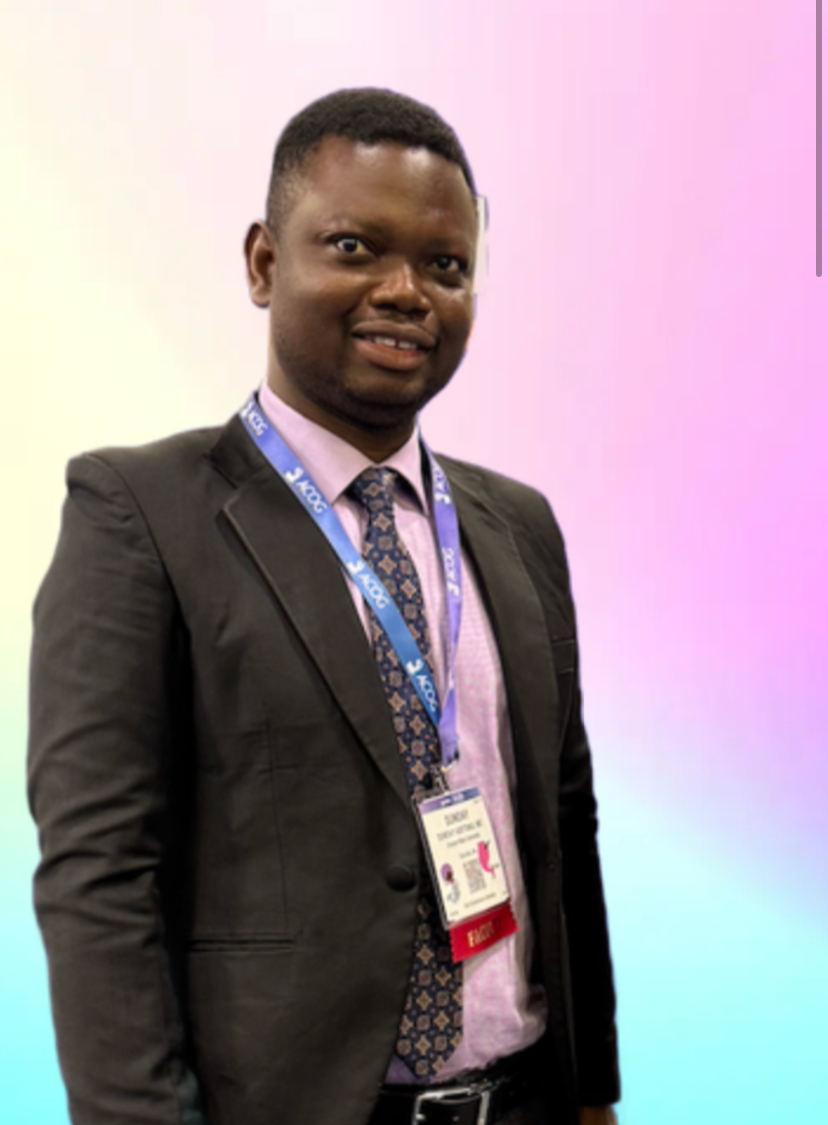
Today, Dr. Sunday A. Adetunji moves between three tightly connected arenas: hospital founder and medical director in Nigeria, epidemiology researcher at Oregon State University, and innovator at the frontier of AI-enabled maternal care. What began as private grief in a Nigerian household has become part of a global effort to make preventable maternal and newborn deaths statistically rare, so that for the next generation of families—from Lagos to Oregon and beyond—survival is no longer determined by a postcode or an ability to pay, but by a health system that is finally ready in time.