
Tuesday, March 3, 2026
Home Blog

Discharged Soldiers Petition Army Chief Over Unpaid Allowances, Withheld Certificates

0

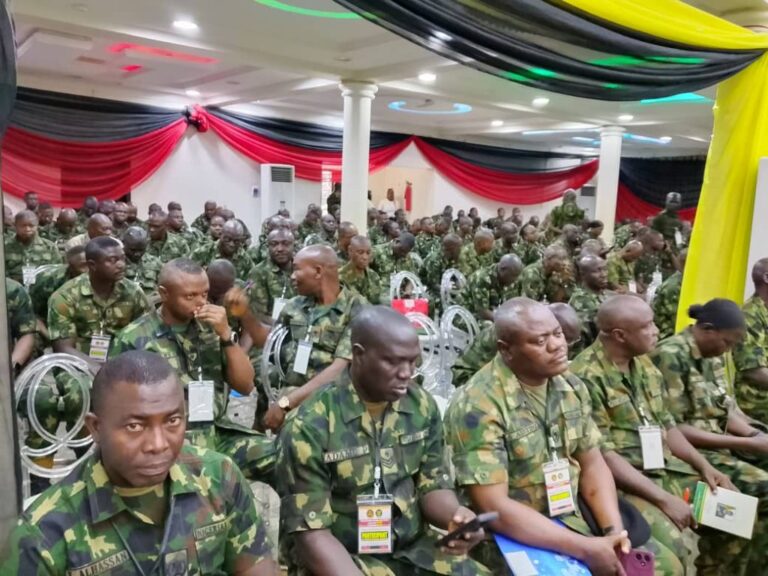
Voluntarily discharged personnel of the Nigerian Army, Batch B, 2025, have petitioned the Chief of Army Staff over what they described as unresolved post-discharge entitlements, administrative irregularities, and alleged discriminatory treatment following their disengagement from service.

In a petition addressed to the Chief of Army Staff at the Nigerian Army Headquarters, Abuja, the affected ex-soldiers said they were formally discharged from service on November 30, 2025, but several statutory benefits due to them have allegedly remained unpaid more than two months after disengagement.

The petitioners listed the non-payment of terminal leave allowance and the statutory three-month upfront payment provided under the Mobilisation, Administration and Finance Arrangement (MAFA) as key grievances.

According to them, the failure to release these entitlements has caused severe financial hardship, stressing that terminal benefits are earned rights and not discretionary privileges.

They also raised concerns over what they described as discriminatory disparity in salary and allowance payments.

The former personnel alleged that officers from the rank of Warrant Officer and above, who were discharged on the same date, were paid their December 2025 salaries and scarce skill allowances, while Staff Sergeants and below were excluded from similar payments.

They argued that such differential treatment violates Section 42 of the 1999 Constitution (as amended), which prohibits discrimination, as well as established military principles of equity and uniform administrative practice.

The petition further alleged that several other ancillary allowances due at the point of discharge remain unpaid without formal explanation or documented justification.

Beyond financial entitlements, the ex-soldiers also complained about the continued withholding of their discharge certificates.

They claimed that over 60 days after their discharge, they have neither received their certificates nor been invited for final documentation, a situation they said has adversely affected their access to pensions, employment opportunities, and civil documentation.

The petitioners noted that no official circular, signal, or policy directive has been communicated to them to justify the delays, omissions, or disparities, which they argued runs contrary to the constitutional principles of fair hearing and administrative transparency under Section 36 of the Constitution.

Citing the Armed Forces Act, MAFA provisions, and Sections 14, 17, and 42 of the Constitution, the former soldiers called on the Nigerian Army leadership to urgently intervene.

They urged the Chief of Army Staff to order the immediate release of their discharge certificates, payment of all outstanding entitlements, and provide a written explanation for the alleged disparity in salary and allowance payments.

Copies of the petition were also forwarded to the Minister of Defence, the Military Pensions Board, and other relevant military and anti-corruption agencies.

The petitioners said they submitted their appeal with utmost respect for military hierarchy, expressing confidence that the Nigerian Army would uphold justice, fairness, and the welfare legacy of the institution.


Insecurity: Lawyer Writes Tinubu, Seeks Withdrawal of Charges Against Abba Kyari

0

A legal practitioner and human rights activist, Adamu Kabiru Adam, has written to President Bola Ahmed Tinubu, calling on the Federal Government to review and withdraw the charges against the suspended Deputy Commissioner of Police, Abba Kyari, amid the country’s worsening security situation.

The letter, dated January 30, 2026, was also copied to the Attorney-General of the Federation and Minister of Justice, urging the Federal Government to exercise its constitutional powers in the interest of national security.

Adam said Nigeria is currently grappling with one of the most severe security crises in its history, with increasing cases of banditry, terrorism, mass kidnappings, and violent attacks, particularly across the northern part of the country.

He noted that thousands of Nigerians have been killed or displaced, while kidnapping-for-ransom has spread across highways, schools, farmlands, and residential communities, severely affecting social and economic activities.

According to him, despite increased security spending and several policy interventions, criminal groups continue to operate with confidence, in some instances imposing illegal levies on communities and overwhelming local security structures.

The lawyer argued that during the period Abba Kyari played a frontline role in internal security operations, incidents of insurgency and organised violent crime were comparatively lower, with notable operational successes recorded through intelligence-driven policing and rapid response strategies.

While reaffirming his commitment to the rule of law and due process, Adam maintained that the continued prosecution of Kyari at a time of national security emergency requires careful reassessment in the overriding public interest.

He cited Section 14(2)(b) of the 1999 Constitution (as amended), which states that the security and welfare of the people shall be the primary purpose of government. He also referenced Section 174, which empowers the Attorney-General of the Federation to institute, take over, or discontinue criminal proceedings in the interest of justice, public interest, and to prevent abuse of legal process.

According to Adam, the prevailing security challenges justify the exercise of prosecutorial discretion, warning that further depletion of experienced security personnel could weaken the nation’s capacity to confront insecurity.

He stressed that his appeal was not intended to interfere with judicial independence but to encourage lawful action in line with constitutional responsibility, national stability, and public safety.

The lawyer therefore urged the Federal Government to discontinue the charges against Kyari, prioritise national security considerations, and adopt measures aimed at strengthening the country’s security architecture and restoring public confidence.

Who Is the Richest Man in Lagos State?

0

Lagos State is not just Nigeria’s commercial capital — it is the heartbeat of wealth creation in West Africa. From bustling ports and financial institutions to tech startups and manufacturing giants, Lagos has produced some of the most influential billionaires on the continent. But one question continues to spark curiosity, debates, and Google searches:

Who is the richest man in Lagos State?

The answer is clear, consistent, and widely recognized.

Aliko Dangote: The Richest Man in Lagos State

Aliko Dangote is the undisputed richest man in Lagos State — and not just Lagos. He is also the richest man in Nigeria and Africa.

With a business empire headquartered in Lagos and operations spanning multiple continents, Dangote’s wealth and influence tower far above his peers.

Who Is Aliko Dangote?

Aliko Dangote is a Nigerian industrialist, investor, and philanthropist. He is the Founder and Chairman of Dangote Group, the largest industrial conglomerate in Africa.

Born on April 10, 1957, Dangote built his fortune through long-term industrial investments rather than short-term trading — a strategy that has paid off massively.

How Did Aliko Dangote Make His Money?

Dangote’s wealth comes from multiple sectors, with Lagos serving as the strategic base of his operations.

1. Cement (Dangote Cement Plc)

Dangote Cement is Africa’s largest cement producer, operating in over 10 African countries. It remains the backbone of his fortune and one of the most profitable companies on the Nigerian Stock Exchange.

2. Dangote Oil Refinery (Lagos)

Located in the Lekki Free Trade Zone, the Dangote Refinery is the largest single-train oil refinery in the world. This multi-billion-dollar project has positioned Dangote as a major global energy player and significantly boosted his net worth.

3. Sugar, Flour, Salt & Food Processing

Through Dangote Sugar Refinery and other subsidiaries, he dominates Nigeria’s food-processing sector.

4. Investments & Logistics

The Dangote Group also has interests in packaging, transportation, real estate, and energy infrastructure.

Estimated Net Worth

As of recent global billionaire rankings, Aliko Dangote’s net worth is estimated at over $20 billion, making him:

  • 🥇 Richest man in Lagos State
  • 🥇 Richest man in Nigeria
  • 🥇 Richest man in Africa

No other Lagos-based billionaire comes close to this valuation.

Why Lagos Is Central to Dangote’s Success

Lagos plays a crucial role in Dangote’s rise:

  • It is Nigeria’s largest consumer market
  • Home to major ports for import and export
  • Financial hub with access to capital markets
  • Strategic location for large-scale industrial projects

By anchoring his businesses in Lagos, Dangote leveraged infrastructure, talent, and market access better than anyone else.

Other Wealthy Billionaires in Lagos (But Far Behind)

While Lagos is home to other extremely wealthy individuals, none rival Dangote’s fortune:

  • Mike Adenuga (Globacom, Conoil)
  • Abdulsamad Rabiu (BUA Group)
  • Femi Otedola (Energy & investments)

These men are billionaires — but Dangote operates in a league of his own.


Lessons from Aliko Dangote’s Wealth Journey

Dangote’s story offers powerful lessons:

  • Industrialization builds lasting wealth
  • Long-term investments outperform quick wins
  • Local dominance can lead to global success
  • Lagos is a launchpad, not a limitation

Final Thoughts

So, who is the richest man in Lagos State?

👉 Aliko Dangote.

His wealth is not just measured in dollars, but in industries built, jobs created, and economic impact across Africa. In a city full of ambition and competition, Dangote stands as the ultimate symbol of what is possible when vision meets execution.

If Lagos is the center of commerce, then Aliko Dangote is its most powerful industrial force.


Engineering Business School Nigeria constitutes Advisory Board, appoints 11 members

0

Engineering Business School Nigeria (EBS Nigeria) has announced the constitution of its Advisory Board with the appointment of 11 distinguished professionals in engineering, business and entrepreneurship.

According to the school, the newly appointed board members are expected to provide strategic guidance and support the institution’s vision of building a world-class engineering–business education framework tailored to Nigeria’s technology and industrial needs.

The appointed Advisory Board members are:
1. Prof. Sony Ali, FNSE
2. Engr. Rose Madaki, FNSE
3. Engr. Dr. Halimat Adediran, FNSE
4. Engr. Femi Dare, FNSE
5. Engr. Austine Agbara, FNSE
6. Engr. Dr. Agbiji Ndifon, FNSE
7. Engr. Dr. Sunday Egbiki, FNSE
8. Engr. Dr. Ojegba Evukowhiroro, FNSE
9. Engr. Joan Nwoke, FNSE
10. Engr. Nenna Igwegbe, FNSE
11. Engr. Rabiu Haruna, FNSE

EBS Nigeria stated that the board members bring a wealth of experience across engineering practice, business leadership and entrepreneurship, which will help drive innovative programmes and strengthen collaboration between academia and industry.

The institution added that the appointments reflect its commitment to producing ethical, innovative and industry-ready professionals who will contribute meaningfully to national development.

In a statement signed by the Director of Programs and Public Communications, Engr. Austine Anyigadi Agbara, MBA, FNSE, the school expressed confidence that the Advisory Board’s collective vision and leadership would position EBS Nigeria for greater impact and excellence.

“Their appointment is a testament to their exceptional expertise and commitment to advancing engineering and business education in Nigeria and beyond,” the statement read.

Engineering Business School Nigeria also congratulated the appointees and wished them success in their new roles.

Contact details:
Engineering Business School Nigeria
Website: www.ebschool.org
Email: info@ebschool.org
Phone: +234 803 499 8045, +852 6889 0951

Food Subsidies, Politics, and the Silent Destruction of Local Farming By President Asiwaju Bola Ahmed Tinubu

0

7th/01_2026
Mudarrifu Jnr, 
Public Health Nutritionist.

What many people celebrate today as “cheap food” is often the result of subsidized imports and food dumping….a practice where governments rely on externally sourced, subsidized food to stabilize prices and achieve short-term political comfort.
While this may temporarily ease hunger and reduce public pressure, it comes at a high hidden cost.
By flooding local markets with cheap imported food, subsistence and smallholder farmers are pushed out of production. They cannot compete with prices that do not reflect real production costs. Over time, local farming systems weaken, rural livelihoods collapse, and communities lose the capacity to feed themselves.
This is not food security. It is the food dependency trap.
Food becomes politicized- used as a tool to gain legitimacy or maintain calm, rather than treated as a system that must be resilient, locally rooted, and sustainable. Once domestic production is destroyed, countries become dangerously exposed to global price shocks, currency fluctuations, and supply disruptions.
True food security is not about how cheap food is today, but whether people can still produce food tomorrow.
If policies do not protect and invest in local farmers, what looks like relief today becomes a crisis tomorrow.
Sustainable food systems must support local production, protect smallholder farmers, and balance short-term needs with long-term resilience. Anything else is political convenience and not a development.

#foodsystems
#foodsustainability
#subsistencefarming
#highlighteveryone

2027: APC Regains Control of Abia as Thousands Dump LP, PDP

0

The All Progressives Congress (APC) has declared a strong return to relevance in Abia State ahead of the 2027 general elections.

The party said it is steadily rebuilding its structure and influence across the state, despite Abia currently being governed by the Labour Party.

This position was made public by the APC South-East Mandate Forum.
The group said recent political activities across several Abia communities show a clear shift in public alignment.

According to the Forum, the Labour Party is gradually losing its grip on the state as grassroots support weakens.

The APC South-East Mandate Forum made this known in a statement released in Umuahia on Monday.

The statement said sustained engagement by APC leaders has begun to reshape the political direction of Abia.
It described the development as a major signal ahead of the 2027 polls.

The coordinator of the Forum, Chief Onyebuchi Okorie, said the renewed momentum followed strategic efforts by the APC leadership in the state.
He credited the development to the leadership of the Deputy Speaker of the House of Representatives, Benjamin Kalu.

According to him, these efforts have led to mass defections from the Labour Party and the Peoples Democratic Party (PDP) to the APC.

The Forum claimed that thousands of supporters from the affected parties openly renounced their former affiliations.
It added that many of them publicly destroyed their party membership cards before declaring support for the APC.
The group said this happened in several grassroots gatherings across the state.

According to the Forum, the scale of the defections points to growing frustration among Abia residents.
It alleged that many citizens are dissatisfied with the performance and direction of the current Labour Party-led government.
The APC, it said, is now being seen as a more serious and organised alternative.

“In recent times, we have witnessed events where thousands of former members of the Labour Party, PDP and other parties openly renounced their affiliations, tore their membership cards, and willingly identified with the APC because they see direction, leadership and seriousness of purpose.

“This is not a movement restricted to political big men. It is a people-driven process. The confidence level of party members has increased, and more people are joining the party.

“What we are seeing is the reawakening of grassroots politics in Abia, where ordinary citizens feel reconnected to a party that speaks their language and understands their everyday realities.

“People are joining the APC in Abia not just because they are dissatisfied elsewhere, but because they believe they will have a voice, relevance and protection within the party,” the statement said.

The Forum stressed that the ongoing political shift goes beyond routine party switching.
It described the situation as a deeper realignment that could define the 2027 elections in the state.
According to the group, the APC is quietly rebuilding its base with strong local participation.

“What is happening today is not noise; it is structure. It is not propaganda; it is participation. The APC is steadily regaining its footing in Abia state.

“As Abia moves closer to 2027, the foundations being laid today will matter,” the group added.

“And at the centre of this reawakening is a leader who understands that political victory begins from the grassroots.”


2027: Aisha Yesufu Vows to Work Against Peter Obi if He Emerges as VP

0

A socio-political activist, Aisha Yesufu, has declared that she will oppose any 2027 presidential ticket that features Peter Obi as a vice-presidential candidate.

Yesufu made her position clear while speaking on the 2027 general election permutations, insisting that Obi should not accept a secondary role under any presidential aspirant.

Her remarks have stirred political debate, especially within opposition circles already positioning ahead of the next election cycle.

In an online video which was sighted by POLITICS NIGERIA, the activist expressed strong dissatisfaction with what she described as a repeated pattern of sidelining strong candidates.

She argued that Obi remains one of the most credible figures in the current political space and should be leading, not deputising.

She said, “I’m giving you people my word. If Peter Obi emerges as a running mate to anyone, I will work against that ticket.

“In my little capacity, I will work against them even if I don’t support any other candidates. Why are we always asking the best to be the second?”

Yesufu’s comments come amid ongoing discussions within opposition blocs ahead of 2027. Peter Obi, former Anambra State governor and Labour Party presidential candidate in 2023, is widely seen as a major contender in any serious opposition arrangement.

Obi is currently linked with the African Democratic Congress (ADC), a party being positioned by a coalition of opposition leaders seeking to challenge the ruling government in the next election.

The party has attracted growing interest as consultations and alignments continue behind the scenes.

However, political signals within the coalition suggest that former Vice President Atiku Abubakar may be favoured for the party’s presidential ticket.

There are also speculations that Obi could be considered as a possible running mate if Atiku secures the nomination, a move that Yesufu has now openly rejected.

Aisha Yesufu stance adds a new layer of pressure to the opposition coalition, especially among supporters who believe Obi should contest only as a presidential candidate.


Social Contract Must Remain Supreme Over Political Agreements

0

At moments of political tension, uncertainty, or transition, leaders often turn to political agreements as quick solutions. Power-sharing deals, coalition arrangements, elite pacts, and peace accords are announced with great fanfare and framed as breakthroughs. Yet, time and again, such agreements fail to deliver lasting stability or public confidence. The reason is not far-fetched: no political agreement can override the social contract between the state and its citizens.

The social contract is the moral and political foundation of any legitimate state. Long before constitutions and elections, thinkers such as Thomas Hobbes, John Locke, and Jean-Jacques Rousseau argued that political authority exists only because individuals consent, explicitly or implicitly, to be governed. This consent is exchanged for protection, justice, and the promotion of collective welfare. Where this bargain collapses, the authority of the state itself is called into question.

Political agreements are of a different order. They are negotiated arrangements among political actors, usually elites, designed to manage power at a particular moment. They may determine who governs, who shares offices, or how resources are distributed among factions. Such agreements can be useful, especially in post-conflict or deeply divided societies. But they are instruments, not foundations.

The danger arises when political agreements begin to act as substitutes for the social contract. When leaders treat elite consensus as more important than popular consent, governance loses its moral anchor. Citizens may obey temporarily, but obedience without legitimacy is fragile.

The social contract is supreme because it defines the purpose of the state. It establishes that government exists not for rulers, parties, or coalitions, but for the people. Political agreements, by contrast, often prioritise elite survival. They focus on stability at the top while ignoring the everyday realities of insecurity, unemployment, inequality, and injustice experienced by ordinary citizens.

This tension explains why many political agreements provoke public backlash. People are not opposed to compromise or peace. They are opposed to exclusion. When decisions affecting millions are taken behind closed doors by a few, citizens feel alienated from the political process. Over time, this alienation manifests as voter apathy, protest movements, or outright rejection of state authority.

History provides many examples. Peace agreements that silence guns but fail to address social injustice often collapse. Coalition governments that share power but neglect public welfare rarely endure. Elite bargains that protect political actors from accountability weaken trust in institutions. In each case, the underlying problem is the same: the agreement violated the spirit of the social contract.

Modern constitutions are meant to institutionalise the social contract. They limit power, guarantee rights, and affirm that sovereignty belongs to the people. Any political agreement that undermines constitutional principles, by entrenching exclusion, suspending accountability, or weakening equality before the law, erodes the social contract itself. Even when such agreements are legal, they may still be illegitimate in the eyes of citizens.

This issue is particularly acute in post-colonial societies. Many states were born not from popular consent but from colonial arrangements and elite negotiations. After independence, political agreements often replaced genuine social contracts. Power was shared among elites, while citizens remained distant from the state. The result has been persistent legitimacy crises, weak institutions, and cycles of instability.

In these contexts, political agreements are frequently celebrated as signs of maturity or pragmatism. Yet without a parallel effort to renew the social contract, through inclusion, justice, and accountability, such agreements merely postpone deeper crises. Stability achieved at the expense of legitimacy is temporary.

The supremacy of the social contract also has implications for democracy. Elections alone do not constitute a social contract. When elections merely rotate elites without improving citizens’ lives, democratic legitimacy suffers. The social contract demands more: responsive governance, protection of rights, and meaningful participation. Political agreements that undermine these principles, even if they follow electoral outcomes, weaken democracy rather than strengthen it.

Importantly, affirming the supremacy of the social contract does not mean rejecting all political agreements. Compromise is a necessary part of politics. However, political agreements must derive their authority from the social contract. They must reflect popular interests, uphold constitutional values, and strengthen citizen-state relations. When agreements serve the public good, they reinforce legitimacy. When they serve narrow interests, they undermine it.

Ultimately, governments do not survive on signatures, handshakes, or press conferences. They survive on trust. Trust grows when citizens believe that the state exists for them, not for a privileged few. That belief is the essence of the social contract.

Political agreements may organise power, but they cannot justify it. Only the social contract can do that. Any society that forgets this risks mistaking elite stability for genuine peace, and temporary order for lasting legitimacy.

By: Christian U. Abu, PhD, MNIM, MAAPS*
Political Scientist

Rivers State, Porthacourt
Nigeria.

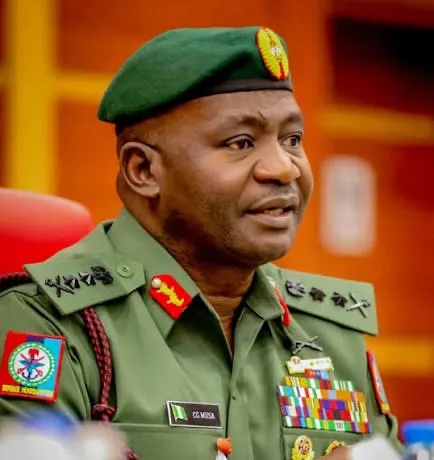
Profile: Things to know about defence minister Christopher Musa

0

Here are some things to know about him:

Musa, born on December 25, 1967, is 58 years old. He graduated from the Nigerian Defence Academy in 1991 with a Bachelor of Science degree after earlier attending the College of Advanced Studies, Zaria, in 1986 and completing his primary and secondary education in Sokoto before that year.

He served as the 18th Chief of Defence Staff from June 2023 to October 2025, where he oversaw integrated operations across all branches of the armed forces. Before then, he was Commander of the Nigerian Army Infantry Corps between2022 and 2023, directing infantry training and development.

From 2021 to 2022, Musa was the Theatre Commander of Operation Hadin Kai in Northeast Nigeria, leading counter-terrorism operations against Boko Haram.

Prior to that, he commanded Sector 3 of the Multinational Joint Task Force in the Lake Chad region from 2019 to 2021, coordinating joint military efforts with neighbouring countries.

During the same period, he also served as Commander of Sector 3, Operation Lafiya Dole, overseeing sector-level counter-insurgency operations.

In 2019, Musa served as Deputy Chief of Staff (Training/Operations) at the Headquarters Infantry Centre and Corps.

Before 2019, he had held several strategic positions, including Infantry Representative on the Training Team at the Army Armour Corps Headquarters, Assistant Director of Operational Requirements at Army Headquarters, Commanding Officer of 73 Battalion, and General Staff Officer 1 (Training/Operations) at 81 Division.

Commissioned as a Second Lieutenant in 1991, Musa began his military career in infantry roles that formed the foundation of his later leadership appointments.

He is also a recipient of several honours, including the Colin Powell Award for Soldiering (2012), in recognition of outstanding military leadership.


“Obi is Lying to his Supporters, He has VP Deal with Atiku” – Keyamo

0

Minister of Aviation and Aerospace Development, Festus Keyamo, has accused Peter Obi of misleading his followers by pretending to seek the 2027 presidency while secretly agreeing to run as Atiku Abubakar’s vice-presidential candidate.

Keyamo made the claim shortly after Obi announced his move from the Labour Party to the African Democratic Congress (ADC) at a political gathering in Enugu. He said Obi sold false hope to supporters by presenting the defection as a presidential ambition, even though, according to him, the deal was already settled.

In a post on X, Keyamo said Obi joined what he described as a party controlled by Atiku, insisting the move was part of a planned arrangement for Obi to become a vice-presidential candidate.

He accused Obi of taking supporters on what he called an emotional journey, only to abandon them at the last moment. Keyamo said Obi should openly admit the political deal instead of dressing it up as a principled decision.

According to the minister, many of Obi’s supporters would feel betrayed once the ADC completes its primaries and unveils him as Atiku’s running mate. He said Obi’s character deserved public examination because of his ambition for high office.

Keyamo also dismissed claims that the APC-led Tinubu government felt threatened by Obi’s defection. He said the ruling party would openly challenge its opponents and allow Nigerians to judge all sides.

He further mocked Obi’s earlier claims of winning the 2023 presidential election, describing it as ironic for someone who claimed victory to now seek a vice-presidential slot under a candidate he once said he defeated.

Keyamo warned that both Obi and Atiku were heading for defeat in 2027, saying they misread Nigeria’s political and demographic realities. He promised to explain his position further as the election approaches.