Tuesday, March 3, 2026
Home Blog Page 2

5 Million Maggots”: Doris Ogala Accuses Pastor Chris Okafor Again – Christianity

0

Nollywood actress Doris Ogala has made new allegations concerning the church pulpit of popular cleric Pastor Chris Okafor, days after he publicly apologised to her during a church service.

The actress, in a video shared online, alleged that what she described as “five million maggots” were buried beneath the church pulpit, a claim that has since sparked intense reactions across social media. Eyes Of Lagos reports,

The development comes after Pastor Chris Okafor tendered a public apology to Doris Ogala while standing on the altar and reportedly went on his knees. The apology followed earlier claims by the actress that the cleric had given her $10,000, which she shared online while flaunting the cash.

In her latest video, Doris Ogala stated that although she has accepted the pastor’s apology, she believes members of the church are under what she described as “bondage.”

In her words, she said,

“Do you know the maggot that is buried inside the ground that has over five million maggots? The bigger the maggot gets, the bigger the congregation gets. Why do you think they are not leaving?”


The actress further alleged that there was more to the church altar than meets the eye, insisting that her claims were not made out of personal bitterness but concern.


Earlier, Doris Ogala had called on the Department of State Services (DSS) to investigate the church pulpit. She alleged that a construction worker reportedly died at the church site and was secretly buried beneath the altar — an allegation that has not been independently verified.


In response to the controversy, Pastor Chris Okafor reportedly invited both the DSS and the police to investigate the church altar. He also offered to sponsor an excavation of the pulpit and stated that the process could be carried out publicly and televised live to prove his innocence.


As of the time of filing this report, no official investigation findings have been made public, and authorities have not confirmed the claims raised by the actress.

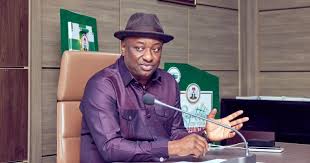
Bookmark This Tweet, Someone Has Agreed To Be VP – Festus Keyamo

0

Finally, the chicken is coming home to roost: I understand that someone, somewhere has drafted and redrafted the statement he will release to hoodwink his ‘supporters’ on why he has accepted to be Vice-Presidential candidate after a primaries that he knows has long been concluded. He has written and torn drafts upon drafts, containing the normal gibberish of ‘my desire to rescue Nigeria’, bla, bla bla. It’s a tough one for him, but we are excited at the prospect of unmasking a true turncoat and a fraud at the coming campaigns. (See the comments after this tweet to identify those whose raw nerves have been seriously affected).

Please, bookmark this tweet so we can all read his statement with some derision when it is eventually released.

WHO DO YOU THINK FESTUS KEYAMO IS REFERING TO HERE?

Christmas Massacre: Man In Santa Costume Opens Fire, Killing 9 In California

0

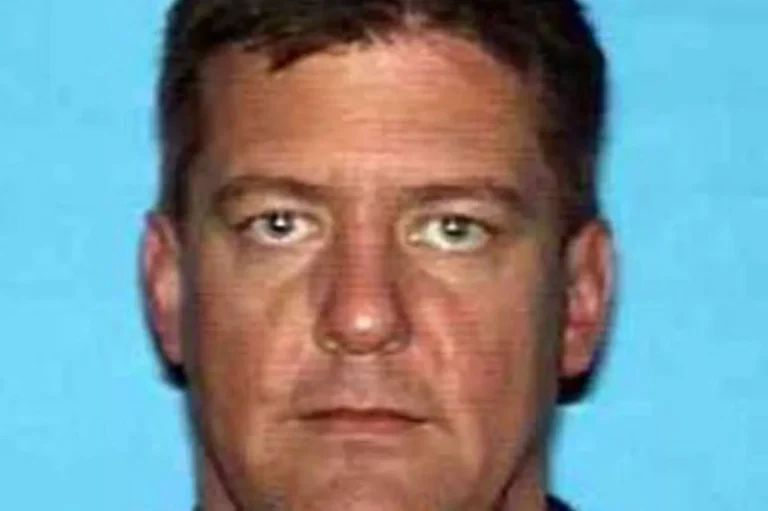
A Christmas Eve gathering in a quiet Los Angeles County cul-de-sac ended in tragedy when a man dressed in a Santa Claus costume opened fire at a family party, leaving nine people dead before later taking his own life, authorities said.

Police identified the suspect as 45-year-old Bruce Jeffrey Pardo, an aerospace industry employee described as a practising Roman Catholic. He reportedly arrived at the Covina-area home carrying a large gift box, then shot an eight-year-old girl who answered the door before firing repeatedly inside the house, where about 25 people — including several children — were celebrating.

Investigators say Pardo had recently finalised a contentious divorce from his ex-wife, Sylvia, on December 18, and believe she was the target of the attack.

The house was later engulfed in flames, and officers recovered nine badly burned bodies from the scene. Positive identification was only possible through dental records, police said. A neighbour, Jan Gregory, recalled seeing a teenage boy fleeing the property shouting that his family had been shot.

Pardo was found dead hours later at his brother’s home. Five firearms were recovered near his body. Detectives said he had no prior criminal history and is believed to have died by suicide after sustaining burns during the incident.

Authorities continue to investigate the events leading up to the attack.

Five Fulanis shot by suspected Berom militias in Plateau

0

By: Zagazola Makama

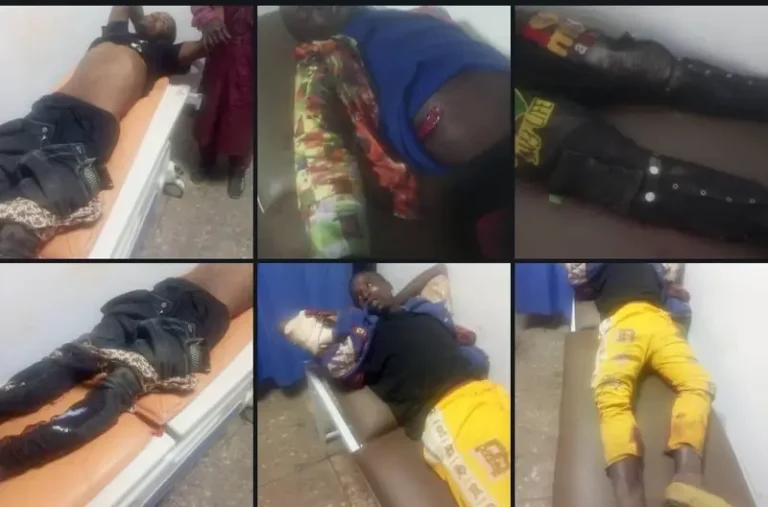
Five Fulanis were critically injured after being shot by suspected Berom militias near Con Filling Station on Bukuru Express Road, close to Angle D in Jos South Local Government Area of Plateau State.


Zagazola Makama gathered that the victims were returning home from Bukuru Cattle Market, popularly known as Kara Market, on the evening of Dec. 27, 2025, as they were approaching Anguldi Filling Station, inside their vehicle, the assailants suddenly opened fire on them without provocation, resulting in serious injuries to all five youths.


The victims have been identified as Abubakar Aji, Idi Saleh, Sulaiman, Nura Muhammad Detta, and Dabo Abubakar. The injured were rushed to Jos University Teaching Hospital by security agents for medical attention.


The Plateau State Chairman of the Miyetti Allah Cattle Breeders Association of Nigeria (Macban), Alhaji Ibrahim Yusuf, confirmed the incident, describing it as part of a recurring pattern of attacks on innocent travellers by ethnic militias in the state.


“We strongly condemn this senseless and criminal act against innocent civilians and call on relevant security agencies to urgently investigate the incident, identify the perpetrators, and ensure they are brought to justice.


“We also urge the Plateau State Government and security authorities to strengthen security along major roads and commercial routes to prevent further attacks and protect the lives and property of all law-abiding citizens, regardless of their ethnic or religious background,”said Yusuf.


The latest attack could be in response to the killing of 12 persons by fulani bandits on the night of 16 December 2025 at an illegal mining site in Fann District, Barkin Ladi Local Government Area of Plateau State.


Gunmen, reportedly stormed a mining site at Tosho Community, rounded up illegal miners, and demanded information about the location of 171 cattle stolen from Nding Community on 10 December. The attack left 12 miners dead, three abducted, and several others injured.


However, the shooting of the five fulani men represents the latest episode in a rapidly escalating cycle of reprisal violence across Plateau State. There has been sustained and coordinated assaults on pastoral communities in Barkin Ladi and Jos East LGAs and Kwi village, in Riyom LGA.


For exactly in December 12, pastoralist were attacked in Nding community in Fan District of Barkin Ladi LGA, where 137 cattle were rustled. The stolen cattle belonged to three herders: Alhaji Wada Sale, Abdullahi Yusuf and Alhaji Talba Abubakar. Consequently, a second attack followed immediately in Kukukah community of Jos East LGA, where 34 cattle were driven away, although three later returned home.


Again, less than 24 hours later, another incident was reported. Nine cows died instantly after allegedly consuming poisonous substances around Kwi village in Riyom LGA.


Two days after, the Fulani retaliated, killing four children in Dorong village, Foron District of Barkin Ladi LGA. The Victims included Precious Joshuah, 17; Isa’ac Joshuah, 9; Mary Joshuah, 7; and Eve Sambo, 3.


Following the killing, the angry Berom militia continued with their attacks against the fulani. This time in Gero village, Jos South LGA, which saw the killing and injury of at least 10 cattle, Twelve others were left fatally wounded.


Zagazola Makama, have long warned in series of articles of this predictable pattern: attacks on herders, particularly cattle rustling and livestock poisoning, often trigger retaliatory strikes against innocent civilians and circle of unending violence.


Despite repeated alerts, the Plateau State government had remained complicit and other concerned authorities have been accused of inaction and selective enforcement, which some residents allege has emboldened the state-supported militias to carry out more attacks.


This growing environment of impunity has left fulani communities vulnerable for attacks and created conditions where reprisal attacks are almost inevitable. The complicity of the local militias and the failure of government to intervene decisively have deepened the cycle, placing innocent civilians including women and children at the highest risk.

Police Confirm Two Dead as Anthony Joshua Survives Ogun Road Accident

0

World-renowned British-Nigerian boxer, Anthony Joshua, on Monday survived a fatal auto crash that claimed the lives of two passengers along the Lagos–Ibadan Expressway in Ogun State.

The accident occurred at about 11:00am near Danco Filling Station, by the Sagamu Interchange, on the Ibadan-bound axis of the highway.

The Ogun State Police Command, in a statement on Monday, confirmed that Joshua was among the occupants of a Lexus SUV involved in the crash. The former heavyweight champion, who was said to be seated at the rear of the vehicle, reportedly sustained minor injuries and is receiving medical attention.

However, two other passengers in the vehicle died at the scene. Their remains have been deposited at the Livewell Hospital Morgue, Sagamu.

The Police Public Relations Officer, DSP Oluseyi Babasayi, who signed the statement on behalf of the Commissioner of Police, said investigations had commenced to determine the circumstances surrounding the accident.

He said, “The Ogun State Police Command confirms that world-renowned boxer, Anthony Joshua, was involved in a road traffic accident today, Monday, December 29, 2025… Tragically, two other passengers in the vehicle lost their lives at the scene.”

The command also condoled with the families of the deceased and assured the public of a thorough probe into the incident.

Further details are expected as investigations progress.

Malami’s Billions Traced To Abacha Loot, Paris Club Refunds, CBN Agric Loans

0

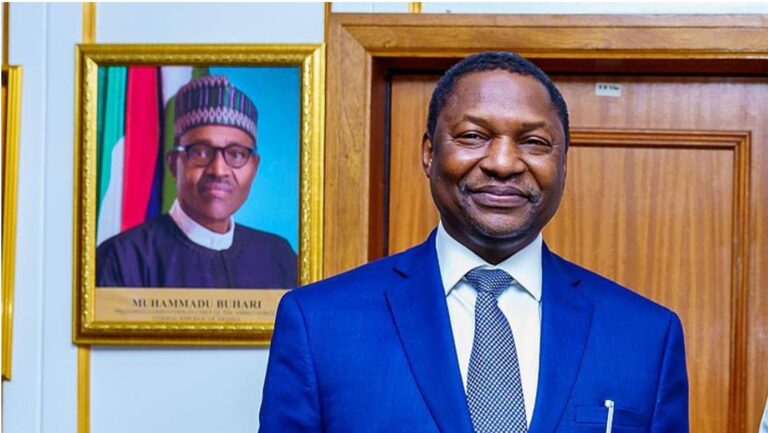
Investigators have linked a bulk of the wealth of Abubakar Malami, the former attorney-general of the federation, to a number of sources, TheCable can report.

At the top of the list are Paris Club refunds made to states, unpaid loans taken from the Central Bank of Nigeria (CBN) under the anchor borrowers programme, and the restitution of Abacha loot to Nigeria.

Malami has been detained by the Economic and Financial Crimes Commission (EFCC) ahead of his arraignment before a federal high court in Abuja.

Properties estimated at over N200 billion have been traced to Malami. The assets are believed to have been acquired when he was attorney-general under former President Muhammadu Buhari from 2015 to 2023.

He has denied all allegations in statements by his media team, alleging political persecution and promising to defend himself in court.

PARIS CLUB REFUNDS

On the legal advice of Malami, the federal government had decided to deduct $418 million from state allocations as payment to consultants over the Paris Club refund.

Nigeria had exited the Paris Club of creditors in 2005 after paying $12 billion in exchange for a write-off of $18 billion of its $30 billion debts accumulated from the early 1980s.

However, the federal government, under former President Obasanjo, paid the $12 billion from the federation purse regardless of how much was owed by the federal, state and local governments to the creditors.

After the states protested, it was decided that they should be refunded since most of the debts were taken by the federal government — with most states not owing foreign creditors.

Consultants were engaged by the federal government to calculate how much was to be refunded to the states, and they charged a commission in excess of $400 million.

The Nigeria Governors’ Forum (NGF) opposed the arrangement, but Malami insisted that the consultants must be paid from state allocations, to be deducted at source.

In a media spat between 2021 and 2022, the NGF accused Malami of pursuing “selfish interest” and alleged that he was working for the consultants rather than in the national interest.

“We’re constrained by the manner in which the honorable attorney-general has been going around various media houses and purporting to create the impression that this is a liability to which governors had committed themselves to and agreed to, even though he is very much aware that that’s not the case,” the NGF said.

“And we reject all of the claims that he has made on this issue. And we also insist that states will not give up on insisting that these purported claims are fraudulent and will not stand as far as governors are concerned and we would take every constitutional and legal means to ensure that these purported consultancy are fully litigated upon by the highest court in the land.”

After initially stopping payment, Buhari later gave his approval, much to the disappointment of the governors.

EFCC investigators have traced the bulk of Malami’s alleged sudden wealth to kickbacks from the deal, sources in the know told TheCable.

ANCHOR BORROWERS’ PROGRAMME

In 2015, the CBN launched the anchor borrowers programme (ABP) — a development finance initiative to boost local food production, create jobs, and reduce food imports.

The ABP was to provide farmers with farm inputs such as seeds, fertiliser and cash for labour, to enable them to increase yields and supply processors.

This was to create a value chain linkage from farm to market and supporting food.

Investigators discovered that Malami used the name of one of his wives, Hajiya Bashir Asabe, to get a N4 billion loan, which was never repaid.

The wife has now been charged to court along with him.

The CBN dispensed over N1 trillion on the ABP and is yet to recover over N600 billion, fuelling speculation that a significant portion of the disbursements might have been slush fund for politicians.

ABACHA LOOT COMMISSION

In 2016, Malami hired the services of two Nigerian lawyers — Oladipo Okpeseyi and Temitope Isaac Adebayo — for the repatriation of $321 million stolen by Sani Abacha, the former military head of state.

The repatriation of the stolen funds started before the administration of former President Muhammadu Buhari in 2015.

The monies had been recovered and frozen in 2013 under former President Goodluck Jonathan, but the repatriation process was stalled in 2015 following a lawsuit filed by the Abachas.

From 2013 to 2014, the federal government had engaged the services of Swiss lawyers, Enrico Monfrini and Christian Luscher, to recover the stolen funds from Liechtenstein and Luxembourg — and domiciled the monies with the attorney-general of Switzerland.

Nigeria had paid four percent of the recovered Luxembourg assets as professional fees and expenses to the foreign lawyers, in addition to roughly $6.8 million in fees paid to Monfrini for the Liechtenstein recoveries.

Since all the fees had been paid by Nigeria, it was only required that Malami, who was the then AGF, would sign a memorandum of understanding (MoU) with the Swiss authorities and commit to an undertaking that the funds would be properly utilised.

However, in December 2017, Malami, in a suspicious move, engaged the services of the two Nigerian lawyers, which cost the country $16.9 million as commission and professional fees from the recovered funds.

Malami engaged the two lawyers to duplicate the job of the Swiss lawyers and get their own cut from the already done deal.

TheCable understands that Okpeseyi and Adebayo have been detained and interrogated by the EFCC.

“They made useful statements to the EFCC,” a source in the know told TheCable.

After the disbursement of the duplicated commission, payments were said to have been traced to Malami by investigators at the anti-graft agency.


BREAKING: Anthony Joshua in road crash, two die

0

World-famous boxer Anthony Joshua was reportedly involved in a road accident on Monday in the Makun area of Ogun State.

The crash occurred shortly after 11 a.m. along the busy Lagos–Ibadan Expressway, near the Danco Filling Station in Makun, before the Sagamu Interchange, inward the Ibadan axis.

Joshua was said to be travelling in a Lexus SUV with registration number KRD 850 HN when the vehicle collided with a stationary truck under circumstances that are still being investigated. The boxer sustained minor injuries.

According to eyewitness Adeniyi Orojo, who also assisted in the rescue efforts, the Lexus SUV was part of a two-vehicle convoy that included a Pajero SUV carrying Joshua’s security detail. There were four occupants in the Lexus at the time of the crash, including Joshua, who was seated behind the driver.

Orojo said that he and other eyewitnesses helped flag down oncoming vehicles before officials of the Federal Road Safety Corps arrived at the scene. Sadly, two of the occupants — the passenger beside the driver and another individual identified as Joshua — were confirmed dead at the scene.

Fans have since taken to social media to express concern, while authorities continue investigating the cause of the crash. Attempts to reach TRACE Commandant Akinbiyi Babatunde for further updates were unsuccessful as calls to his line did not connect.

More updates on Joshua’s condition and the ongoing investigation are expected in due course.

Details later…

Over 438 Boko Haram ISWAP Fighters Eliminated

0

By: Zagazola Makama

The sustained offensive by troops of the Joint Task Force North East, Operation Hadin Kai (OPHK), has continued to yield significant gains, with no fewer than 438 Boko Haram and Islamic State West Africa Province (ISWAP) terrorists neutralised within seven months.

The Theatre Commander, OPHK, North-east Sector 1, Maj.-Gen. Abdulsalam Abubakar, disclosed this on Saturday in Maiduguri during the 2025 Christmas Luncheon organised for troops in the Theatre of Operations.

Abubakar said the period under review also witnessed the recovery of 254 assorted weapons and about 300 units of Starlink communication devices, which had been deployed by terrorists to enhance their command, control and intelligence-gathering capabilities.

According to him, the troops equally rescued 366 civilians, including women and children, from various terrorist enclaves across the North-east.

“The surrender of 881 JAS and ISWAP fighters and their families, among other accomplishments, further underscores the progress made by our troops in degrading the operational strength and morale of the terrorists,” the theatre commander said.

He described the achievements as a reflection of the resilience, professionalism and sacrifice of officers and soldiers operating under extremely challenging conditions in the Joint Operations Area (JOA).

Abubakar noted that the Christmas celebration coincided with the ongoing dry season operations, a critical phase traditionally marked by intensified military action against insurgent hideouts.

Despite the demanding operational tempo, he assured the Chief of Army Staff (COAS), Lt.-Gen. Olufemi Oluyede, of the unwavering commitment of troops to sustain pressure on the terrorists until lasting peace is restored in the region.

“The gallant officers and soldiers of Operation Hadin Kai remain fully committed to maintaining the momentum of our operations, in line with the strategic guidance of the Chief of Army Staff,” he said.

The theatre commander attributed the successes recorded in the JOA to the COAS’ timely interventions, particularly in the areas of logistics support, welfare of troops, improved firepower and enhanced intelligence coordination.

He added that the synergy among the Armed Forces, intelligence agencies and other security stakeholders had also contributed significantly to the operational breakthroughs.

Abubakar used the occasion to commend the Federal Government, the Defence Headquarters and the Borno State Government for their sustained support to military operations in the North-east.

He also paid tribute to fallen heroes who paid the supreme price in the fight against terrorism, urging troops to remain steadfast and disciplined as operations progress.

The Christmas luncheon, which featured prayers and goodwill messages, was aimed at boosting the morale of troops deployed across the Theatre during the festive season.

Abubakar noted that the Christmas celebration coincided with the ongoing dry season operations, a critical phase traditionally marked by intensified military action against insurgent hideouts.

Despite the demanding operational tempo, he assured the Chief of Army Staff (COAS), Lt.-Gen. Olufemi Oluyede, of the unwavering commitment of troops to sustain pressure on the terrorists until lasting peace is restored in the region.

“The gallant officers and soldiers of Operation Hadin Kai remain fully committed to maintaining the momentum of our operations, in line with the strategic guidance of the Chief of Army Staff,” he said.

The theatre commander attributed the successes recorded in the JOA to the COAS’ timely interventions, particularly in the areas of logistics support, welfare of troops, improved firepower and enhanced intelligence coordination.

He added that the synergy among the Armed Forces, intelligence agencies and other security stakeholders had also contributed significantly to the operational breakthroughs.

Abubakar used the occasion to commend the Federal Government, the Defence Headquarters and the Borno State Government for their sustained support to military operations in the North-east.

He also paid tribute to fallen heroes who paid the supreme price in the fight against terrorism, urging troops to remain steadfast and disciplined as operations progress.

The Christmas luncheon, which featured prayers and goodwill messages, was aimed at boosting the morale of troops deployed across the Theatre during the festive season.


Turning Amnesty into Legacy: Waking the Sleeping Mind of the Niger Delta – IPND”

0

Date: December 2025

Over the years, the Indigenous People of the Niger Delta (IPND) has remained consistent in its constructive engagement on policies affecting peace and development in the region. This commitment prompted an official response from the Office of the Secretary to the Government of the Federation (Ref: 59778/V/T3/176, 25 September 2018), which issued a directive to the Presidential Amnesty Programme to give due attention to IPND’s submission titled “Request for Urgent Intervention” and to take necessary action within its mandate.

That correspondence, preserved in the public record, reflects IPND’s sustained effort to ensure that the Presidential Amnesty Programme (PAP) evolves into a more transparent and result-oriented mechanism for sustainable regional growth.

Fifteen years after the establishment of the PAP, the fundamental question remains: what truly transforms lives in the Niger Delta?
IPND maintains that the most enduring policies are those that build people, not dependency — programs that strengthen intellect, creativity, and enterprise rather than perpetuate cycles of crisis and appeasement.

To achieve this, interventions must go beyond short-term relief and commit to sustained human capital development that produces self-reliant citizens capable of shaping their own destinies.

In its most recent review, IPND noted encouraging developments within the Presidential Amnesty Programme (PAP) under the coordination of Dr. Dennis Brutu Otuaro.
The Programme has demonstrated a more deliberate focus on structured education, advanced vocational training, and international postgraduate scholarships.

During a courtesy visit abroad, IPND’s President-General, Pumokumo B. E. Tiemo, met and interacted with some PAP scholars and delegates. The engagement offered firsthand insight into the calibre of beneficiaries and the professionalism shaping their training and academic pursuits.

IPND commends Dr. Otuaro’s leadership and his conscious emphasis on capacity building as the foundation for peace and progress. By investing in intellect and skill, rather than short-term appeasement, the PAP is helping cultivate a new generation of Niger Deltans equipped to lead the region into a future of innovation, productivity, and pride.

While acknowledging the progress achieved, IPND calls for expanded collaboration between PAP, state governments, and private-sector institutions.
Such partnerships can ensure that skills acquired through the amnesty framework align with real market demands and industrial growth.

Joint initiatives already piloted in Bayelsa, Rivers, and Delta States — where PAP beneficiaries trained in renewable energy, maritime logistics, and small business management — have begun yielding positive employment and entrepreneurship outcomes. These successes highlight the value of multi-sector engagement as a catalyst for inclusive development.

IPND encourages Dr. Otuaro and his team to sustain and deepen these collaborations, ensuring that the energy of the Niger Delta youth is transformed into sustainable economic and social progress.

IPND also commends the dedication and conduct of the PAP scholars and delegates it has interacted with both within and outside Nigeria.
As representatives of the region, beneficiaries are urged to continue serving as positive ambassadors of the Niger Delta’s identity, culture, and values.

They carry not only the hopes of their communities but the story of a people renowned for resilience, hospitality, and creativity. IPND encourages them to embody the dignity, discipline, and integrity that reflect the true heritage of the Niger Delta — and to use their education and skills to uplift others when they return home.

The IPND urges all Niger Delta leaders to adopt a legacy-driven governance philosophy that prizes transparency, continuity, and accountability.
Policies should be designed to outlive tenures and leave behind institutions, not mere headlines.

Where genuine progress is visible, it must be acknowledged and where gaps remain, constructive dialogue must continue.
IPND reaffirms its readiness to support every leader and agency committed to sustainable, people-centred development in the Niger Delta.

Signed,
Pumokumo B. E. Tiemo
President-General
Indigenous People of the Niger Delta (IPND)

Is Nigeria in Economic Revival or Economic Detention?

0

By Prof. Mary Ezeajughu
Contributor: Dr. Chika Abazu

I approach this question with a data-driven lens, drawing on key macroeconomic indicators, policy impacts, and structural trends from May 2023 to late 2025. The framing of Nigeria’s situation as either economic revival or economic detention flows from the bold reforms introduced by President Bola Ahmed Tinubu, including fuel subsidy removal, exchange rate unification, and renewed efforts to address corruption, infrastructure decay, and institutional weaknesses.

These reforms were, in many respects, unavoidable. Nigeria inherited deep structural distortions from the Buhari era, where subsidies drained public finances, the Naira was artificially supported through multiple exchange-rate windows, and growth stagnated under the weight of oil dependency and governance inefficiencies.

My conclusion is clear: Nigeria is on a path toward economic revival, but it is a slow, uneven, and painful revival. The early shock was severe: inflation spiked, the currency depreciated rapidly, and living standards deteriorated. But by late 2025, indicators point toward stabilization, improved fiscal health, rising investor confidence, and renewed infrastructure momentum. This is not blind optimism. It reflects a transition from a subsidy-dependent system riddled with inefficiency to one more aligned with market realities and private-sector-driven growth.

However, revival is neither automatic nor universal. Poverty, inequality, insecurity, and underemployment remain major headwinds. Nigeria is moving in the right direction, but progress must be sustained, inclusive, and humane.

1. Context: Why the Reforms Were Necessary

Nigeria entered 2023 still Africa’s largest economy, but facing major vulnerabilities:

  • Fuel subsidies consumed trillions of Naira annually, encouraged smuggling, and diverted funds from health, education, infrastructure, and security.

  • Multiple exchange rates distorted the forex market, encouraged arbitrage, and discouraged investment.

  • Inflation had already climbed above 22% before reforms, driven by insecurity, weak power supply, and high logistics costs.

  • Corruption, institutional weakness, insecurity, and industrial stagnation compounded economic hardship and fueled mass emigration (popularly known as the “Japa” trend).

The elimination of subsidies and exchange-rate unification, alongside monetary tightening, were adopted as corrective measures long recommended by global financial institutions and many economists. The immediate effects were painful but largely predictable.

2. Evidence of Revival: What the Numbers Suggest

By late 2025, several key indicators began trending positive:

GDP and Sector Performance

  • GDP growth strengthened compared to 2023 levels.

  • Non-oil sectors expanded, reducing dependence on oil earnings.

  • Oil production improved from post-pandemic lows.

Inflation: Still High, But Cooling

Inflation surged after subsidy removal but began easing in 2025, assisted by tighter monetary policy. Food inflation remains elevated, which is a reminder that insecurity and weak logistics still hurt households.

Currency and Reserves

Unifying the exchange rate led to a major Naira depreciation initially, but the market later stabilized and reserves improved, helping restore investor confidence.

Fiscal Position

Subsidy savings widened fiscal space, reduced deficits, and increased the ability to invest in infrastructure and social spending.

Investments

Foreign and domestic investment interest has improved, particularly in infrastructure, ports, logistics, and energy.

3. Infrastructure as a Growth Engine

Infrastructure investment has become a cornerstone of reform. Major highway projects, port upgrades, hydropower expansion, energy-sector reforms, and airport development are gradually reducing logistics costs and stimulating economic activity. These projects generate jobs and improve productivity, which are key ingredients for sustained growth.

4. Why Many Nigerians Still Don’t Feel the Revival

Economic revival does not yet translate into widespread relief.

  • Poverty rates increased during the reform shock.

  • Many jobs remain informal and poorly paid.

  • Social protection programs reached only a fraction of those in need.

  • Food inflation remains stubborn due to insecurity in farming areas.

  • Wage growth lags behind price growth.

For millions, recovery still feels distant.

5. So, Revival or Detention?

Nigeria is not in economic detention, which would imply irreversible decline. Instead, it is undergoing painful economic recalibration. The reforms have begun stabilizing macroeconomic fundamentals. Growth is recovering, inflation is moderating, fiscal balance is improving, and infrastructure momentum is expanding.

However, revival will only be sustained if the government:

✔ strengthens social safety nets
✔ enhances food security through improved rural security
✔ supports SMEs and manufacturing
✔ maintains policy consistency
✔ deepens anti-corruption efforts
✔ ensures inclusive growth

Countries like Indonesia and India experienced similar reform-induced shocks, followed by sustained growth when reforms were maintained and social protections strengthened.

Conclusion

Nigeria’s economy is in recovery, but not yet healed. The worst of the shock appears to be over, but the benefits must reach ordinary citizens. With transparency, discipline, and inclusive policies, Nigeria can sustain growth and realistically target higher expansion rates by 2027.

Revival is underway, but it must be managed with compassion, competence, and a commitment to social justice.